Disclosure: this article contains affiliate links — we may earn a commission on qualifying purchases at no extra cost to you.
The red light panel market is crowded in 2026 and spec sheets lie. A Light Therapy Insiders review (2026) found manufacturer irradiance claims differ from solar-meter readings by 23%.
Irradiance — power per square centimeter at your skin — drives session length and dose. Buy a weak panel and your "10-minute session" becomes 30 minutes.
This list ranks 10 panels covering wavelengths, irradiance at 6 inches, price, FDA status, and warranty. Most "FDA cleared" claims use the ILY code per a GembaRed FDA Class II analysis (2024) — a heat-lamp clearance, not therapy clearance.
Affiliate Disclosure: Red Light Finder may earn commission on purchases through links here. Reviews are independent.
At a Glance: The 10 Panels Ranked
| Rank | Panel | Wavelengths (nm) | Irradiance at 6" | Verdict |
|---|---|---|---|---|
| 1 | Joovv Solo 3.0 | 660, 850 | ~100 mW/cm² | Best for proven brand reliability |
| 2 | Mito Red MitoMAX 2.0 | 660, 850 | ~100 mW/cm² | Best for full-body coverage value |
| 3 | Bon Charge Max | 660, 850 | 142 mW/cm² (mfg) | Best for low-EMF claims |
| 4 | PlatinumLED BIOMAX 600 | 480, 630, 660, 810, 830, 850, 1060 | 129 mW/cm² | Best for wavelength variety |
| 5 | BlockBlueLight PowerPanel Mega | 630, 660, 810, 830, 850 | 89-167 mW/cm² | Best for silent operation |
| 6 | Hooga HG500 | 660, 850 | 94 mW/cm² | Best value pick |
| 7 | Red Light Rising Half Stack 3.0 | 660, 850 | ~75 mW/cm² avg | Best for UK and EU buyers |
| 8 | Rouge Pro G4 | 8 bands (630-1060) | 59 mW/cm² avg | Best for spectral customization |
| 9 | Therabody ThermBack LED | NIR (single) | Not published | Best handheld for back pain |
| 10 | Vellgus Pro | 660, 850 | 100-150 mW/cm² (mfg) | Best entry-level full-size |
How We Looked at PBM Basics: 660nm and 850nm Dominate
Photobiomodulation (PBM) uses red and near-infrared light to stimulate mitochondrial cytochrome c oxidase. Red at 660nm penetrates skin and is best studied for collagen, wound healing, and acne per a PubMed PBM wavelength study (2021). Near-infrared at 850nm reaches deeper tissue for joint and muscle recovery.
A Journal of the American Academy of Dermatology PBM review (2024) confirmed 600-700nm and 800-900nm as the PBM "optical windows" where light penetrates with minimal scatter. Extra wavelengths like 1060nm aren't useless, but the evidence is thinner than for the 660/850 pair.
The therapeutic dose window sits between 4 and 60 joules per square centimeter, per a PMC transcranial PBM review (2024). A panel pushing 100 mW/cm² delivers 60 J/cm² in 10 minutes. A panel pushing 30 mW/cm² needs 33 minutes for the same dose.
1. Joovv Solo 3.0 — Industry Standard Tier 1 (Verdict: Best for proven brand reliability)
The Joovv Solo 3.0 is the panel most home users start with. It runs $1,295 to $1,699 with 660nm red and 850nm near-infrared across 150 LEDs per the Joovv Solo 3.0 product page (2026).
Independent testing puts verified irradiance around 100 mW/cm² at 6 inches per a Longevity Store panel comparison (2026). Joovv's own claim of ~130 mW/cm² is inflated by 25%. Power draw is 250 VA.
The panel is 36 inches tall, weighs 14 pounds, and is FDA Class II registered under the ILY code. Warranty is 2 years with a 60-day trial per a MedGrade Joovv review (2026). See our Joovv vs Mito vs PlatinumLED breakdown for more.
2. Mito Red MitoMAX 2.0 — Full-Body Coverage (Verdict: Best for most coverage per dollar)
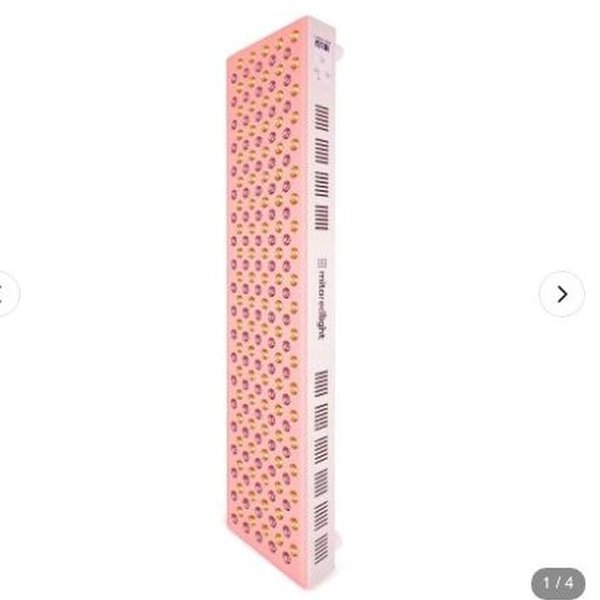
The Mito Red MitoMAX 2.0 is a 36-inch panel with 200 LEDs and 300W draw, covering a full torso from one position. Wavelengths split 50/50 between 660nm and 850nm.
Third-party testing shows the MitoMAX delivers 68,040 joules in a 10-minute session per the Mito Red MitoMAX product page (2026). That works out to roughly 100 mW/cm² across the full panel area. Price typically lands $999-$1,299.
Mito Red is FDA Class II registered as device #288202 per a Michael Kummer Mito Red review (2026), ETL certified, with a 2-year warranty and 60-day guarantee. Strongest value pick at the full-size tier.
3. Bon Charge Max — Low-EMF Premium (Verdict: Best for low-EMF claims)
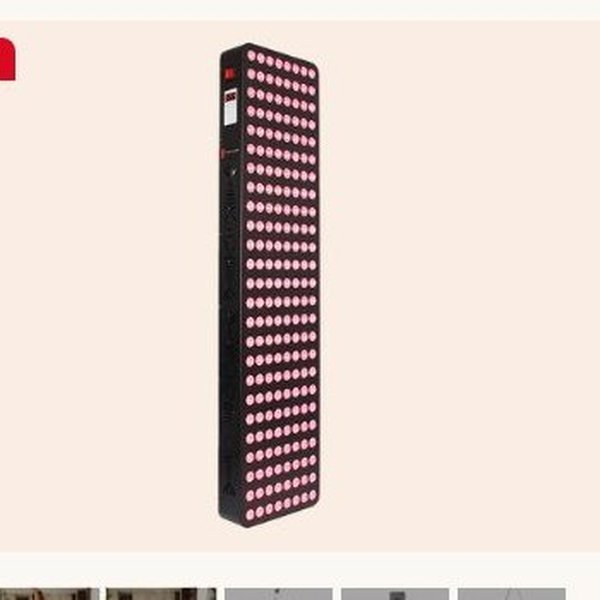
Bon Charge's Max panel sits at $849.15 with 200 LEDs and the 660nm/850nm pair. The brand markets low EMF as a primary differentiator, per the Bon Charge Max product page (2026). That matters if you sit close to the panel for long sessions.
Manufacturer-claimed irradiance is over 142 mW/cm². Independent third-party verification at that figure is harder to find. Treat the spec as a ceiling, not a floor.
The panel carries FDA registration, CE, and FCC certifications. Bon Charge's design costs about 20% more than equivalent-spec Hooga or Vellgus panels. Worth it if low EMF and finish matter to you.
4. PlatinumLED BIOMAX 600 — Multi-Band Spectrum (Verdict: Best for wavelength variety)
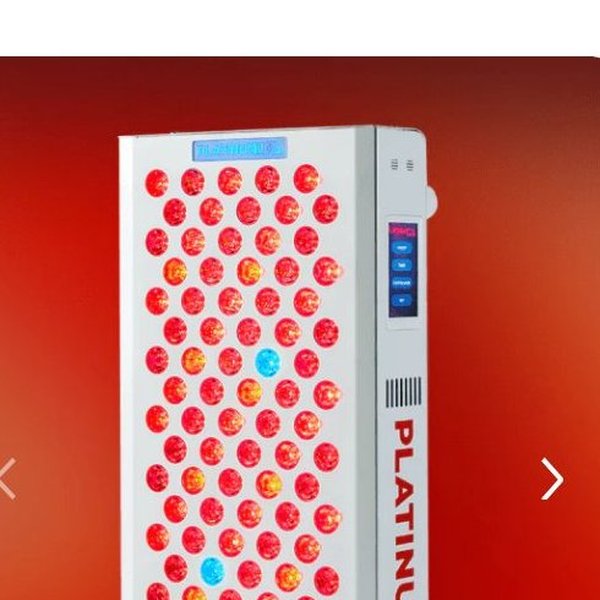 Image: PlatinumLED Therapy Lights
The BIOMAX 600 is the wavelength outlier. It runs a 7-band array — 480nm blue, 630nm and 660nm red, plus 810nm, 830nm, 850nm, and 1060nm near-infrared, per the PlatinumLED BIOMAX product page (2026).
Independent measurement at 6 inches comes in around 129 mW/cm² per a MedGrade BIOMAX 600 review (2026). PlatinumLED's marketing claim of 191 mW/cm² lands 30% higher than reality. Still, that's one of the highest verified irradiance figures in this list.
Pricing varies wildly between retailers — $549 to $899 is the realistic range in 2026. FDA Class II registration and a 3-year warranty round it out. The 1060nm band has thin evidence behind it but does penetrate slightly deeper than 850nm.
5. BlockBlueLight PowerPanel Mega — Silent and Strong (Verdict: Best for silent operation)
The BlockBlueLight PowerPanel Mega uses 300 dual-chip 5W LEDs and a 5-wavelength array — 630nm, 660nm, 810nm, 830nm, and 850nm, per the BlockBlueLight PowerPanel Mega page (2026). It's the closest competitor to the PlatinumLED on wavelength variety, without the 1060nm band.
Manufacturer irradiance is 167 mW/cm² at 6 inches via solar meter, but spectrometer testing comes in at 89 mW/cm². Solar meters overstate. Spectrometers tell the truth.
Light Therapy Insiders ranked the Gen 5 Mega (2026) fifth in average irradiance among all panels tested and measured zero EMF during use. At 43 decibels, only two panels they tested ran quieter. Price is around $1,275-$1,499.
6. Hooga HG500 — Value Benchmark (Verdict: Best value pick)
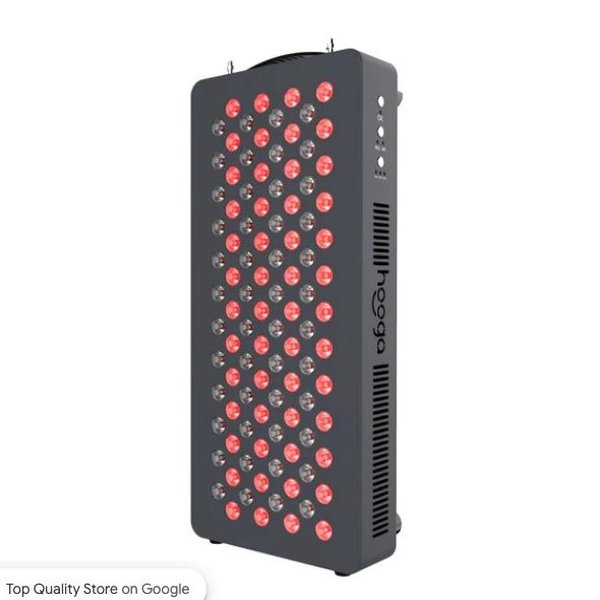
The Hooga HG500 is the value benchmark for half-body panels. It runs $359 with 100 5W LEDs at 660nm and 850nm, separate switches for each wavelength, and measured irradiance of 94 mW/cm² at 6 inches per the Hooga HG500 product page (2026).
Hooga panels are built on the same Chinese OEM lines that supply several premium brands. The driver and LED quality are real. The difference shows up in marketing spend, not hardware.
A 3-year warranty backs the panel, with cooling fans that run audibly but not loudly. The honest tradeoff: clinical-grade irradiance without paying $1,500, but no app, no Bluetooth, no community brand cache. See our home vs professional red light therapy comparison.
7. Red Light Rising Half Stack 3.0 — UK and EU Pick (Verdict: Best regional fit for Europe)
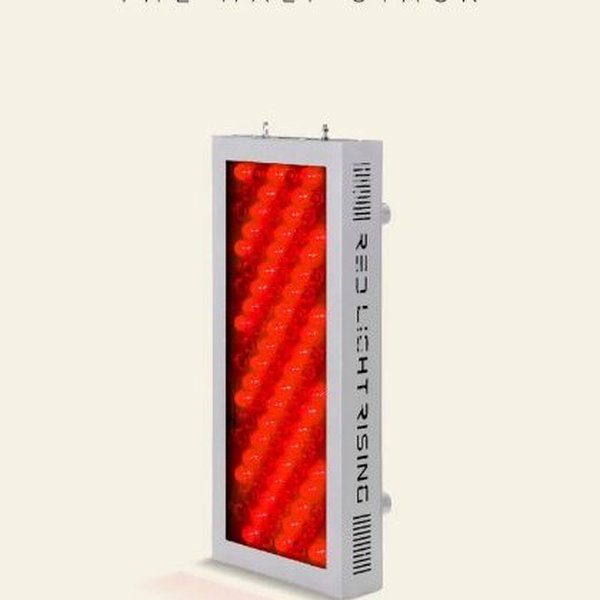
Red Light Rising is the UK-based brand worth knowing if you live in Britain or Europe. The Half Stack 3.0 is their mid-size offering, designed for half-body coverage at standing height.
They publish in-house testing using an OHSP-350F spectral irradiance colorimeter per the Red Light Rising Half Stack 3.0 page (2026) — more transparency than most brands. Testing of the similar Advantage 900 2.0 measured peak 106 mW/cm² and 9-point average of 75 mW/cm².
Pricing for UK and EU buyers includes free shipping and local taxes. For US buyers, import costs make this hard to justify when Hooga or Mito Red offer similar specs at lower landed cost.
8. Rouge Pro G4 — Spectral Customization (Verdict: Best for spectral experimentation)
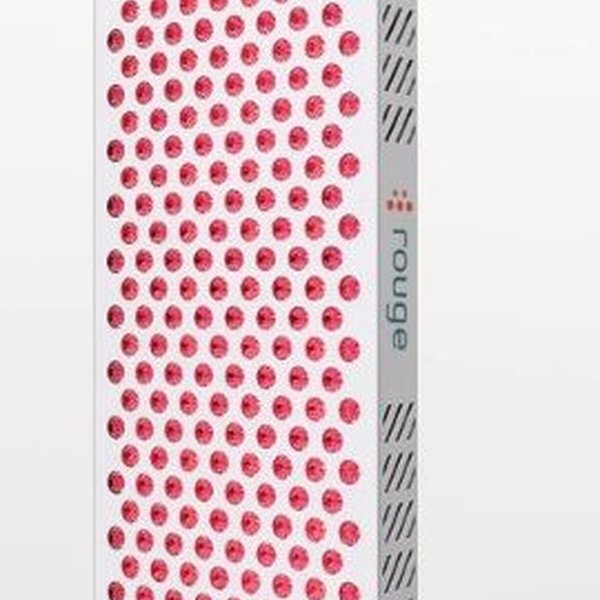
The Rouge Pro G4 carries 288 5W multichip LEDs across 8 wavelengths — 630, 650, 660, 670, 810, 830, 850, and 1060nm, per the Rouge Pro G4 product page (2026). It's a half-body panel at roughly 32 by 11 inches. Price runs around $1,495.
Independent testing by Alex Fergus measured 59 mW/cm² average irradiance at 6 inches with peak readings around 81 mW/cm² per a Light Therapy Insiders Rouge G4 Pro review (2026). That's mid-pack, not best-in-class.
What you pay for here is the touchscreen control, the app, the independent dimming for each of the 8 wavelengths, and wireless syncing to expand with additional G4 panels. If you want to dial in specific PBM doses by wavelength, this is the most flexible consumer panel in 2026.
9. Therabody ThermBack LED — Handheld Alternative (Verdict: Best handheld for back pain)
The Therabody ThermBack LED is the handheld alternative on this list. It's not a panel. It's a wearable wrap that combines near-infrared LED light, 3 heat levels (102°F, 107°F, 113°F), and 3 vibration patterns per the Mayo Clinic Store ThermBack LED listing (2026).
The device targets lower back pain specifically. Wavelength specs are not published with the detail panel users expect — Therabody markets it as "near-infrared" without naming the nm. That's a tradeoff for the form factor.
The use case is different from a panel — you wear this during recovery, sleep, or movement. Pick the ThermBack if back pain is your primary issue and a panel session won't fit your day. Pick a panel for everything else.
10. Vellgus Pro — Entry-Level Full-Size (Verdict: Best honest budget option)
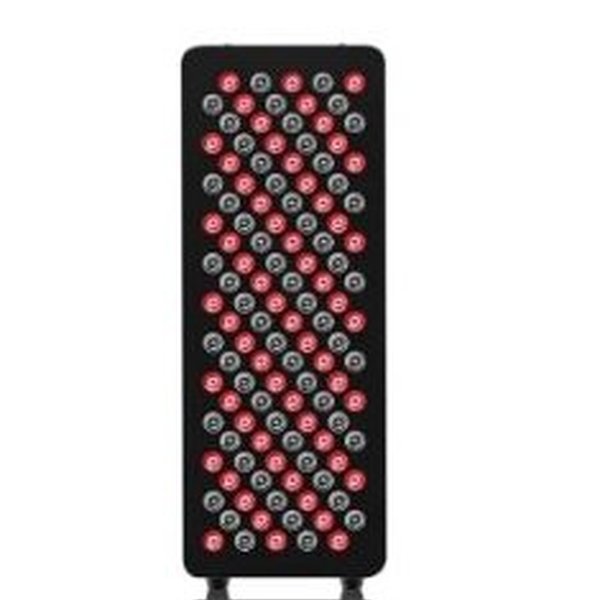
The Vellgus Pro lands at the entry-tier for full-size panels. Pricing typically runs $499-$599 depending on promotion, with manufacturer-claimed irradiance of 100-150 mW/cm² at 6 inches per the Vellgus Pro product page (2026). The wavelengths are the standard 660nm/850nm pair.
Independent verification of Vellgus irradiance is thin. The Vellgus Elite, a sibling model, has been measured around 245 mW/cm² peak per a WellnessPulse panel roundup (2026) — suspiciously high, and likely single-LED peak rather than panel average. Treat Vellgus specs with skepticism.
The Pro ships with timer, cooling fan, and stand, with a 2-year warranty. If the Hooga HG500 is sold out or you want full-body coverage at under $600, Vellgus is the next pick. See our red light wavelengths guide for science background.
Frequently Asked Questions
Q: What is the difference between irradiance and power for red light therapy? A: Power is what the panel draws from the wall in watts. Irradiance is how much light energy reaches your skin per square centimeter, measured in mW/cm². Always look for irradiance at a specified distance (usually 6 inches), not raw wattage.
Q: Should I buy a panel or a handheld red light device? A: Panels deliver more area coverage and higher total dose per session, better for full-body recovery and skin health. Handhelds work for targeted spots — joints, scars, specific pain points. If you have one specific issue, a handheld may be enough.
Q: Are red light therapy panels FDA approved? A: No panel on this list is "FDA approved." Most are "FDA registered" under the ILY product code, originally a heat-lamp clearance that permits marketing for "temporary relief of minor aches and pains." FDA registration confirms the device is safe to sell, not that it has been tested for any specific therapeutic effect.
Q: Do red light therapy panels emit harmful EMF? A: All electronic devices emit some EMF. The IEEE recommends sub-2 mG at typical use distance. Joovv, Mito Red, PlatinumLED, Bon Charge, and BlockBlueLight all test below 0.5 mG at 6 inches.
Q: How often should I use a red light therapy panel? A: For most goals, 10 to 20 minutes per area, 3 to 5 times per week is the standard protocol. The therapeutic dose window is 4-60 J/cm². More is not better — the biphasic response curve means excessive dosing can reverse the benefit.
Related Reading
- Joovv vs Mito Red vs PlatinumLED: 2026 Panel Comparison
- Red Light Therapy Bed vs Panel: Which Is Right for You?
- At-Home vs Professional Red Light Therapy: When DIY Works
-- The Red Light Finder Team