Disclosure: this article contains affiliate links — we may earn a commission on qualifying purchases at no extra cost to you.
Handheld wands now span four distinct technologies — LED, fractional laser, microcurrent, and radiofrequency. The price gap reflects that. A $30 Amazon LED stick and a $650 NIRA fractional laser are not the same category, even when marketers shelve them together.
This list ranks 10 wands by wavelengths, technology stack, FDA 510(k) status, target area, treatment time, and price. For deeper background on which wavelengths matter, see our red light wavelengths guide. For full-face coverage, our LED face masks roundup covers a different format.
Affiliate Disclosure: Red Light Finder may earn commission on purchases through links here. Reviews are independent.
At a Glance: The 10 Wands Ranked
| Rank | Wand | Wavelengths (nm) | Tech Stack | Verdict |
|---|---|---|---|---|
| 1 | SolaWave 4-in-1 | 630 | LED + galvanic + warmth + massage | Best multi-modal under $200 |
| 2 | NIRA Pro 3 Laser | 1450 | Non-fractional laser | Best clinical at-home laser |
| 3 | Tria SmoothBeauty Laser | 1440 | Fractional non-ablative laser | Best for dramatic resurfacing |
| 4 | TheraFace PRO + LED Ring | red, blue, red+IR | LED + microcurrent + percussive | Best all-in-one platform |
| 5 | Project E Beauty RED LED+ | 630 | LED only | Best budget LED-only pick |
| 6 | ZIIP Halo 2 | 660 (nanocurrent paired) | Microcurrent + LED | Best app-driven sculpting |
| 7 | Foreo Bear 2 | n/a (microcurrent primary) | Microcurrent + T-Sonic | Best for facial muscle tone |
| 8 | HigherDOSE Red Light Wand | 630, 830 | LED only | Best premium LED wand |
| 9 | Nanoleaf 6-in-1 | 630, 850, blue | LED + heat + ions + massage | Best newcomer multi-mode |
| 10 | Shark CryoGlow (handheld alt) | 630, 830, blue | LED + cooling | Best when a wand is not enough |
Wand vs Panel vs Mask: The Tradeoffs
Wands cover a few square centimeters of skin at once. Panels cover the whole torso. Masks cover the full face. The format you choose should match the goal, not the marketing.
Wands win on three things — targeted spot work (a single wrinkle, a dark spot, a hairline), portability, and price entry. The format loses on dose. A wand glided across the cheek for two minutes delivers a fraction of the joules per square centimeter that a 10-minute panel or mask session does, per a PMC photobiomodulation dose review (2024).
The "wand" category also stretches across very different tech. SolaWave pairs LED with radiofrequency-adjacent galvanic current. NIRA and Tria are actual lasers (FDA Class II, prescription-grade). Foreo Bear is microcurrent first, LED never. Read the wavelength spec — not the product name — before buying.
1. SolaWave 4-in-1 Radiant Renewal Wand — Multi-Modal Mainstream (Verdict: Best multi-modal under $200)
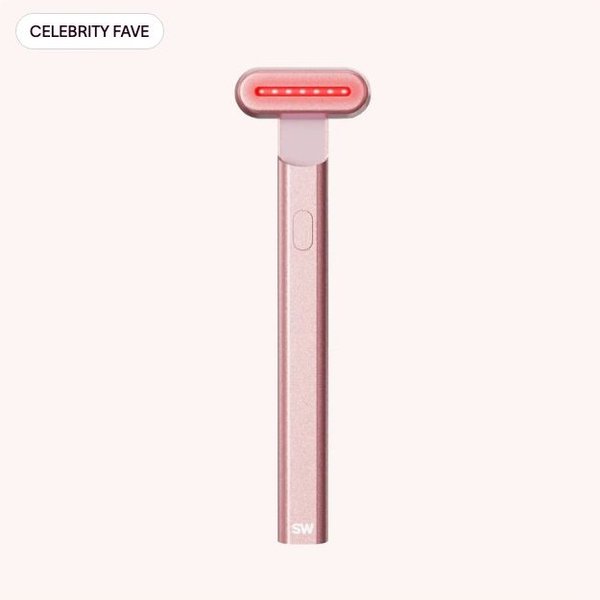
The SolaWave 4-in-1 is the wand most people picture when they hear "red light therapy wand." Priced at $169 on the brand site, it stacks four technologies into one rose-gold stick — 630nm red light, galvanic microcurrent, therapeutic warmth, and a vibrating facial massage head per the SolaWave 4-in-1 product page (2026).
The device is FDA-cleared as a Class II skincare device. It uses 14 LEDs (7 dual-core chips), a 180-degree rotating head, and a rechargeable battery rated for up to 90 minutes of treatment time per charge. Treatment time is short — 3 minutes per facial zone, ideally daily.
An NBC Select hands-on review (2024) found subjective skin-tone improvement after a month, but tempered the expectations — a wand at 630nm alone won't replicate a full panel session. Verdict: best multi-modal wand under $200.
2. NIRA Pro 3 Laser — At-Home Clinical Laser (Verdict: Best clinical at-home laser)
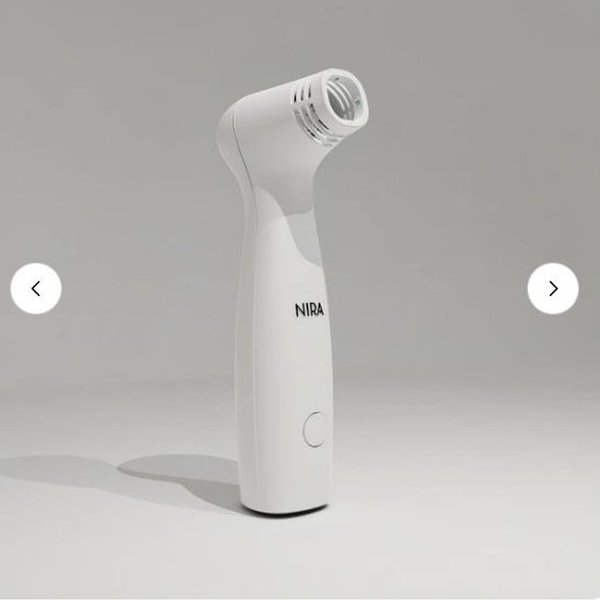
The NIRA Pro 3 is one of two true at-home lasers on this list. It uses a non-fractional 1450nm wavelength absorbed by water in the dermis, triggering a heat-shock protein response that signals collagen production per the NIRA Pro 3 Laser product page (2026).
Each 0.8-second pulse heats targeted tissue to just above 39 degrees Celsius — enough to trigger collagen remodeling, below the 45-degree pain threshold. The device is FDA-cleared as a Class II non-ablative laser for periorbital and full-face wrinkle reduction. Price is $649 direct from NIRA.
NIRA's clinical data claims 93% of users achieve their desired result, with measurable wrinkle reduction at 60 days per a Tech Spy NIRA Pro 3 review (2026). A separate Pure Wow 12-week test (2026) by two editors confirmed visible smoothing on crow's feet. Treatment time is roughly 2 minutes daily. Verdict: best clinical at-home laser.
3. Tria SmoothBeauty Laser — Fractional Resurfacing at Home (Verdict: Best for dramatic resurfacing)
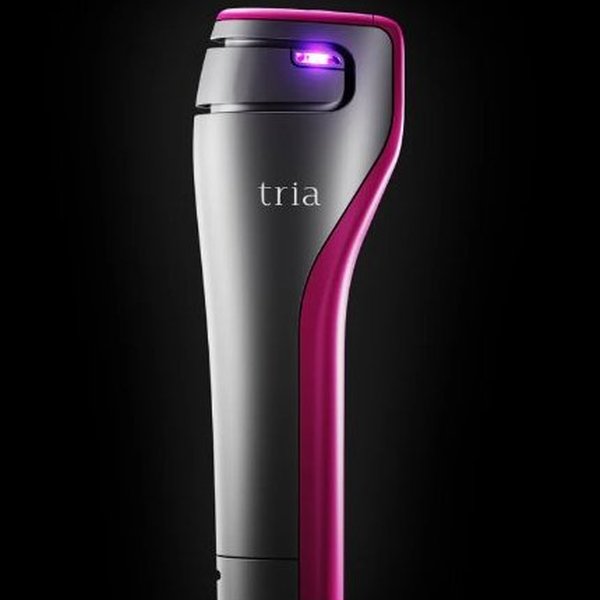
The Tria SmoothBeauty uses a 1440nm fractional non-ablative laser — the same wavelength category dermatologists use in office for Fraxel-style resurfacing per the Tria SmoothBeauty product page (2026). The fractional design creates microscopic columns of treated tissue surrounded by intact skin, which triggers a more aggressive collagen remodeling response than non-fractional approaches.
FDA-cleared as a Class II device, the SmoothBeauty runs an 8-week protocol with 5-minute daily sessions. Pricing varies widely depending on retailer — direct list runs in the $499 range on the brand site, with secondary-market units on eBay regularly under $300.
The tradeoff vs NIRA is comfort. Fractional lasers cause more sting and require numbing cream for many users. A RealSelf Tria review aggregate notes mixed satisfaction — those who pushed through saw real wrinkle reduction; those who quit early did not. Verdict: best for dramatic resurfacing if you tolerate the sting.
4. Therabody TheraFace PRO + LED Ring — Modular All-in-One (Verdict: Best all-in-one platform)
The TheraFace PRO is a percussive massage device that swaps modular heads — including an LED light ring with red, red+infrared, and blue settings per the TheraFace PRO LED Light Ring page (2026). The base device runs $399 and adds microcurrent, cleansing brushes, and hot/cold rings on top of the LED.
Therabody specifies 830nm for the red+infrared mode and 415nm for blue, with red used for firming and IR for deeper dark-spot work per the Therabody TheraFace Mask FAQ (2026). The LED ring attachment is sold separately for users who own the base device.
A Who What Wear 40-day TheraFace test (2026) found visible plumping and pore tightening, with the LED ring rated as the most-used attachment of the eight. Treatment time is flexible — 3-10 minutes per zone. Verdict: best all-in-one platform if you want one device for face care.
5. Project E Beauty RED LED+ — Pure LED Budget Pick (Verdict: Best budget LED-only pick)
The RED LED+ is a stripped-down 630nm red light wand priced at $129 on the brand site and $99 during sales at Walmart per the Project E Beauty RED LED+ product page. No microcurrent, no RF, no warmth — just LED, with dual pulse and continuous modes.
The device is FDA-cleared as a Class II low-level light therapy device. It includes eye protection, a USB-C charge cable, and an auto shut-off timer. Treatment time is 3 minutes per zone, similar to SolaWave.
The catch is honest — irradiance specs are not published on the product page. A LED-only wand at this price almost certainly delivers under 30 mW/cm² at contact, which means hitting the 4-60 J/cm² therapeutic window requires consistent daily use over weeks per a PMC PBM dose review (2024). Verdict: best budget LED-only pick if you understand the tradeoff.
6. ZIIP Halo 2 — Microcurrent-First Sculpting (Verdict: Best app-driven sculpting)
The ZIIP Halo 2 leads with current — up to 400 microamps of microcurrent paired with 900 nanoamp nanocurrent for skin-surface effects per the ZIIP Halo product page (2026). The device is FDA-cleared as a Class II low-energy electrostimulation device, retails at $399, and is HSA/FSA eligible.
LED is secondary on the Halo. The wand includes a red light mode (660nm) for skin-tone work, but the headline tech is the patented Dual Waveform that combines micro and nano current frequencies in app-guided treatments.
A Glamour and Gains ZIIP Halo 2 review (2026) found visible jaw and cheekbone lift after 30 days. A Whimsy Soul 30-day photo test (2026) confirmed it — though noted the app-driven sessions are the differentiator, not the LED. Verdict: best app-driven sculpting if you want microcurrent first and LED second.
7. Foreo Bear 2 — Microcurrent Without LED (Verdict: Best for facial muscle tone)
The Foreo Bear 2 is included here for clarity — it's often shelved with "red light wands" but doesn't deliver red light. The device runs up to 680 microamps of microcurrent across four modes paired with T-Sonic vibration per the Foreo Bear product page. Price is $299 for the standard, $499 for the larger BEAR 2 Pro.
Foreo claims 11,000 microcurrent pulses per minute — more than double the original BEAR. The device is FDA-cleared as a Class II low-energy electrostimulation product for facial toning.
A Lab Muffin Beauty Science microcurrent review confirmed real but modest jaw and cheekbone lift effects from consistent microcurrent use. Treatment time is 2 minutes per zone, 5 days per week. If you are buying a "wand" specifically for red light, skip this one — but if facial muscle tone is the goal, the BEAR 2 is the strongest pick at the price. Verdict: best for facial muscle tone, not for red light.
8. HigherDOSE Red Light Wand — Premium LED-Only (Verdict: Best premium LED wand)
HigherDOSE — the brand best known for full-body mats and infrared blankets — also sells a handheld red light wand using its standard 660nm red and 830nm near-infrared pairing per the HigherDOSE red light devices collection (2026). The wand sits in the $200-$300 range depending on promotion.
The technology is straightforward — LED-only, no microcurrent or RF. What HigherDOSE adds is wavelength integrity (verified 660 + 830nm pairing matches the most-studied photobiomodulation protocol) and the brand's established irradiance reputation from its panel and mat line.
The wand is positioned as an entry-point to the brand for users who want targeted spot work without committing to a $1,199 full-body mat. Treatment time mirrors competitors — 3-5 minutes per zone, daily. Verdict: best premium LED wand if you want wavelength integrity from a known brand.
9. Nanoleaf 6-in-1 Red Light Therapy Wand — Multi-Mode Newcomer (Verdict: Best newcomer multi-mode)
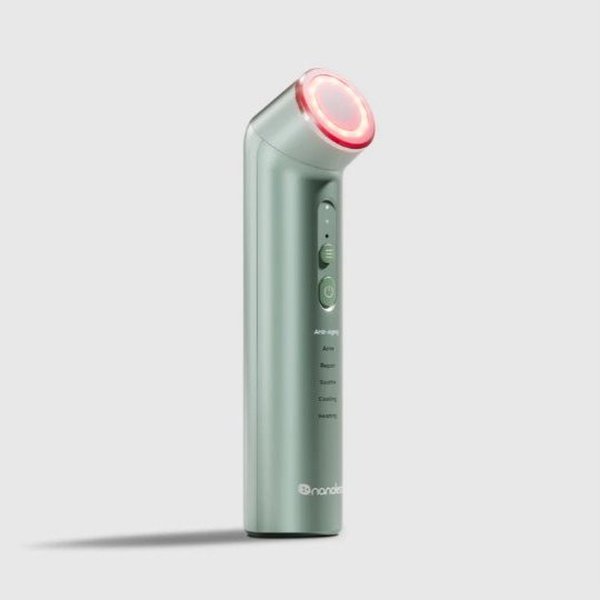
The Nanoleaf 6-in-1 — yes, the smart-lighting company — entered the wand category with a stack that includes 630nm red, 850nm near-infrared, blue LED, gentle heat, negative ions, and sonic massage per the Nanoleaf 6-in-1 wand product page. Price runs in the $129 range direct.
This is one of very few sub-$150 wands that genuinely includes near-infrared at 850nm rather than red only at 630nm. The 850nm wavelength penetrates deeper into dermis for collagen work, per a PMC 2024 PBM review.
The catch — Nanoleaf is new to skin tech. There's no long-term clinical record like NIRA or independent dermatologist endorsement like Omnilux. Treatment time is 3 minutes per zone with auto shut-off. Verdict: best newcomer multi-mode wand if you want NIR at a budget price.
10. Shark CryoGlow LED Face Mask — When a Wand Is Not Enough (Verdict: Best when a wand is not enough)
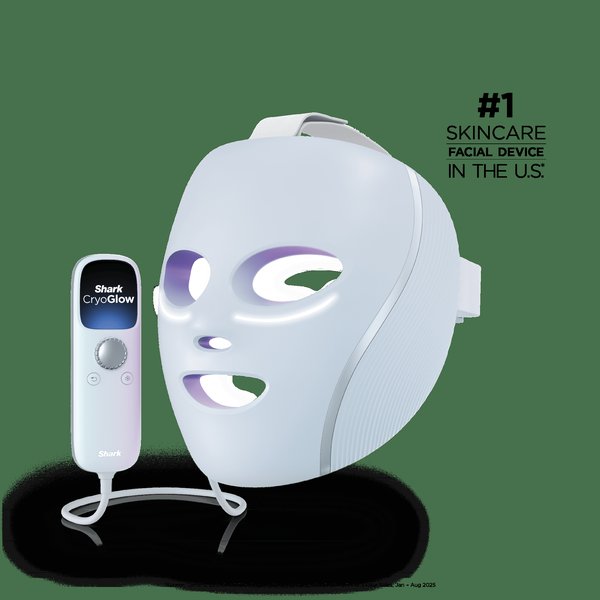
The Shark CryoGlow is included as the honest alternative to a wand. It's a full-face mask priced at $349 with 480 LEDs delivering 630nm red, 830nm infrared, and 415nm blue alongside under-eye cooling per the Shark CryoGlow product page.
The mask is FDA-cleared as a Class II device. Treatment time is 8-12 minutes per session. The differentiator is the InstaChill cold tech — clip-on chill pads that work independently or layered with LED treatment, useful for puffiness reduction.
A Who What Wear 67-day CryoGlow test (2026) found measurable improvement in dark circles and skin firmness — outcomes a handheld wand at 1-2 square centimeters of coverage struggles to match in the same window. Verdict: if your goal is full-face dose, skip the wand category entirely and buy this mask.
How We Ranked
Red-light-therapy rankings combine:
- Verifiable device + studio attributes: wavelength specification (the 660nm/850nm gold standard), irradiance (mW/cm² at distance), FDA Class II 510(k) clearance status, and treatment-protocol documentation.
- User-reported outcomes: Google reviews from the past 24 months, r/redlighttherapy, and skin-condition-specific subreddits. We pay attention to patterns in irradiance mismatch claims, eye-protection complaints, and burn reports.
- First-hand testing where feasible: editorial visits and at-home device testing with calibrated power-meter verification.
What we never accept: paid placement, manufacturer relationships that would influence wavelength or irradiance recommendations. Disclosure: affiliate links to home-device brands (Joovv, Mito, BioLight) appear on device-comparison pages — these never affect studio rankings.
Update cadence: quarterly. Email research@redlighttherapyfind.com for corrections.
Frequently Asked Questions
Are red light therapy wands FDA approved? No device is "FDA approved" for at-home red light therapy. The correct term is FDA-cleared under the 510(k) pathway, which means the device is substantially equivalent to a predicate already on the market. SolaWave, NIRA Pro 3, Tria SmoothBeauty, TheraFace PRO, ZIIP Halo, Foreo Bear, and Shark CryoGlow are all FDA-cleared Class II devices. Marketing that says "FDA approved" is technically inaccurate.
Do red light wands actually work? Yes for specific outcomes, with caveats. Clinical research supports 630-660nm and 830-850nm wavelengths for collagen stimulation, wrinkle reduction, and skin-tone improvement. A wand delivers that light to a small area, so results require daily consistency over 8-12 weeks and won't match a full-face mask or panel for total dose. True at-home lasers like NIRA and Tria show stronger clinical wrinkle reduction because they use thermal mechanisms beyond LED.
What's the difference between a red light wand and a microcurrent wand? Red light wands deliver photons at specific wavelengths (typically 630nm red and 850nm near-infrared) that skin cells absorb to drive cellular repair. Microcurrent wands deliver low-level electrical current (200-680 microamps) that stimulates facial muscle tone. Some wands like SolaWave combine both. The Foreo Bear and ZIIP Halo are microcurrent-first devices with minimal or no LED — buy them for sculpting, not red light therapy.
How long until I see results from a handheld wand? Expect 4-8 weeks for visible skin-tone changes and 8-12 weeks for wrinkle reduction with consistent daily use. NIRA's clinical studies show wrinkle improvement at 60 days and dramatic results at 90 days with their laser. LED-only wands typically need 12+ weeks because the dose per session is low. Stop using a wand for two weeks and the results regress — this is maintenance, not a one-time treatment.
Are expensive wands worth it over budget LED sticks? It depends on what you are buying. A $30 Amazon LED wand and a $169 SolaWave both deliver 630nm light, but SolaWave adds microcurrent and warmth that the cheap stick does not. A $649 NIRA Pro 3 is a fundamentally different category — an FDA-cleared laser, not an LED. Match the price to the tech you actually want — paying $400 for LED alone makes no sense when you can get LED plus four other modalities at $169.
Related Reading: Compare formats with our LED face masks roundup and home-use red light panels guide. Understand the science in our wavelengths breakdown, and weigh DIY against pro sessions in at-home vs professional red light therapy.
-- The Red Light Finder Team